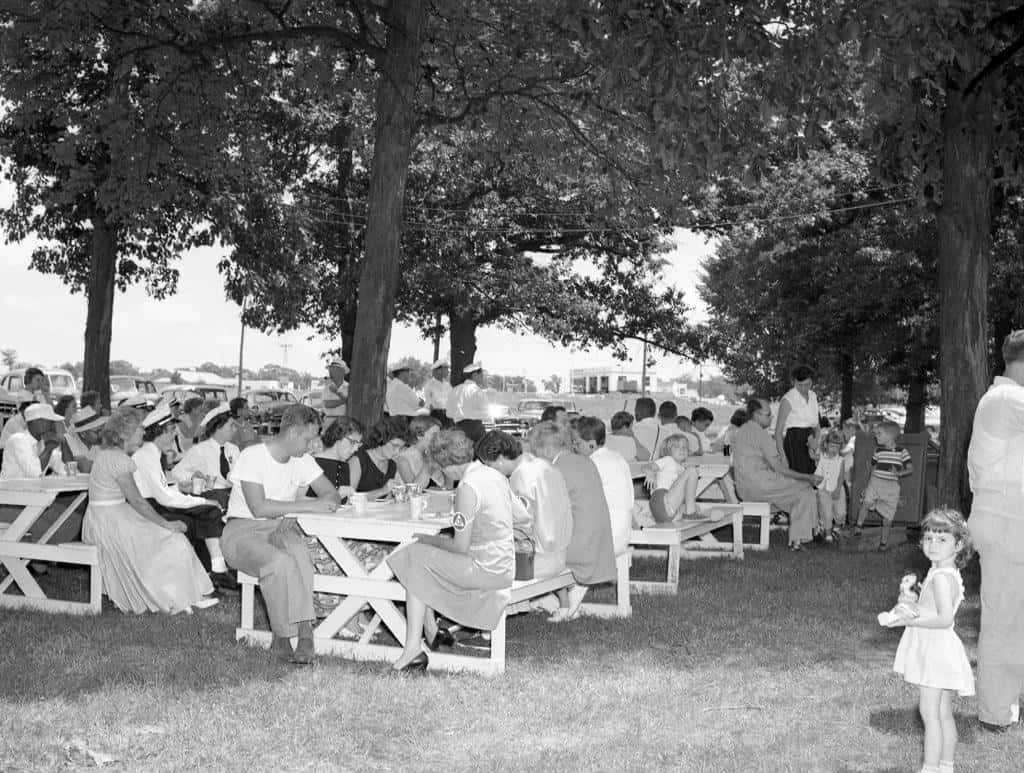
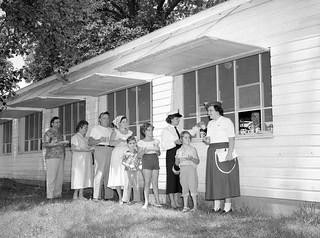
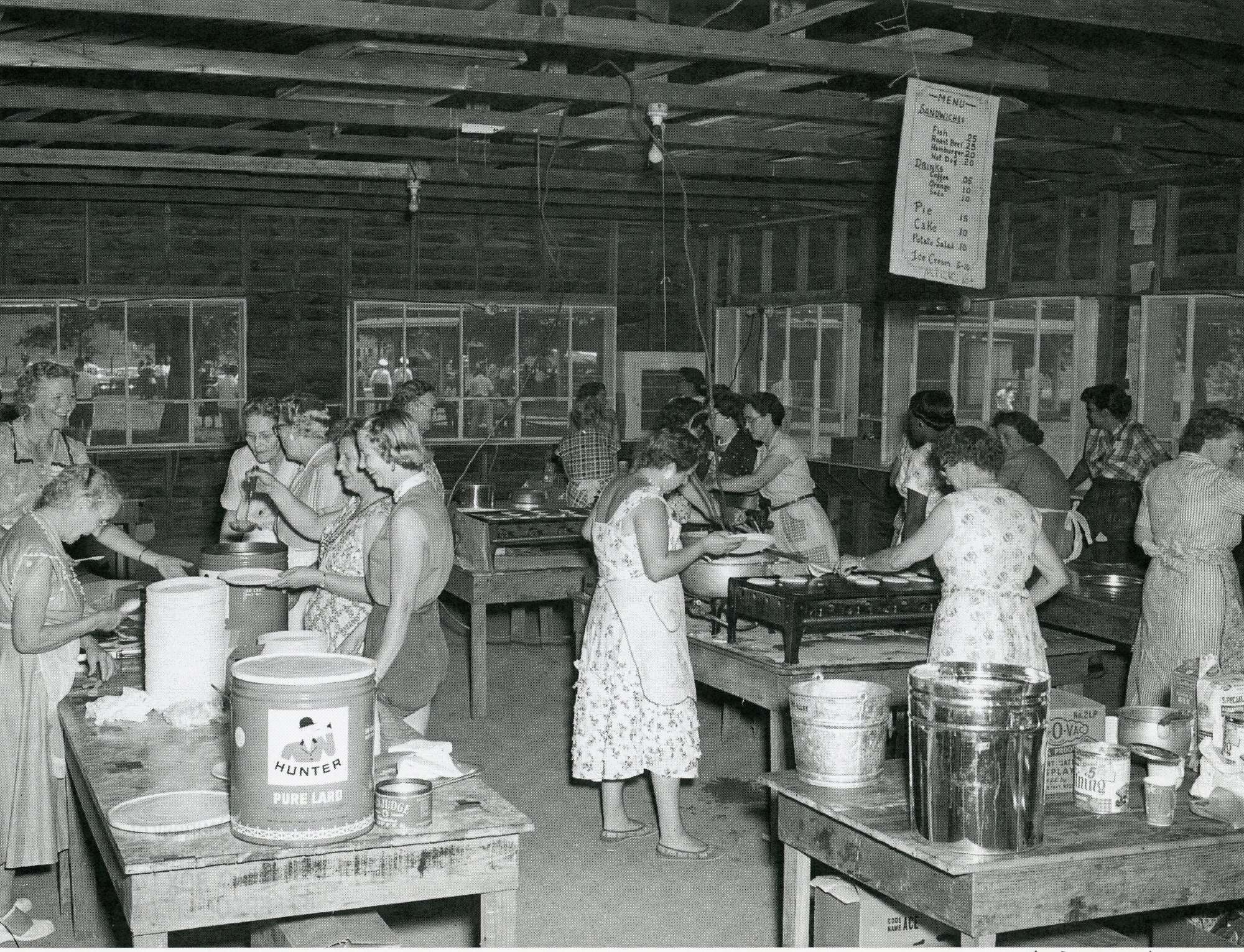
On the evening of Monday, November 24, 1958, dozens of Warren County families gathered at the Marthasville Schoolhouse for a meeting sponsored by the Women’s Activity Committee of the Warren County Farm Bureau.
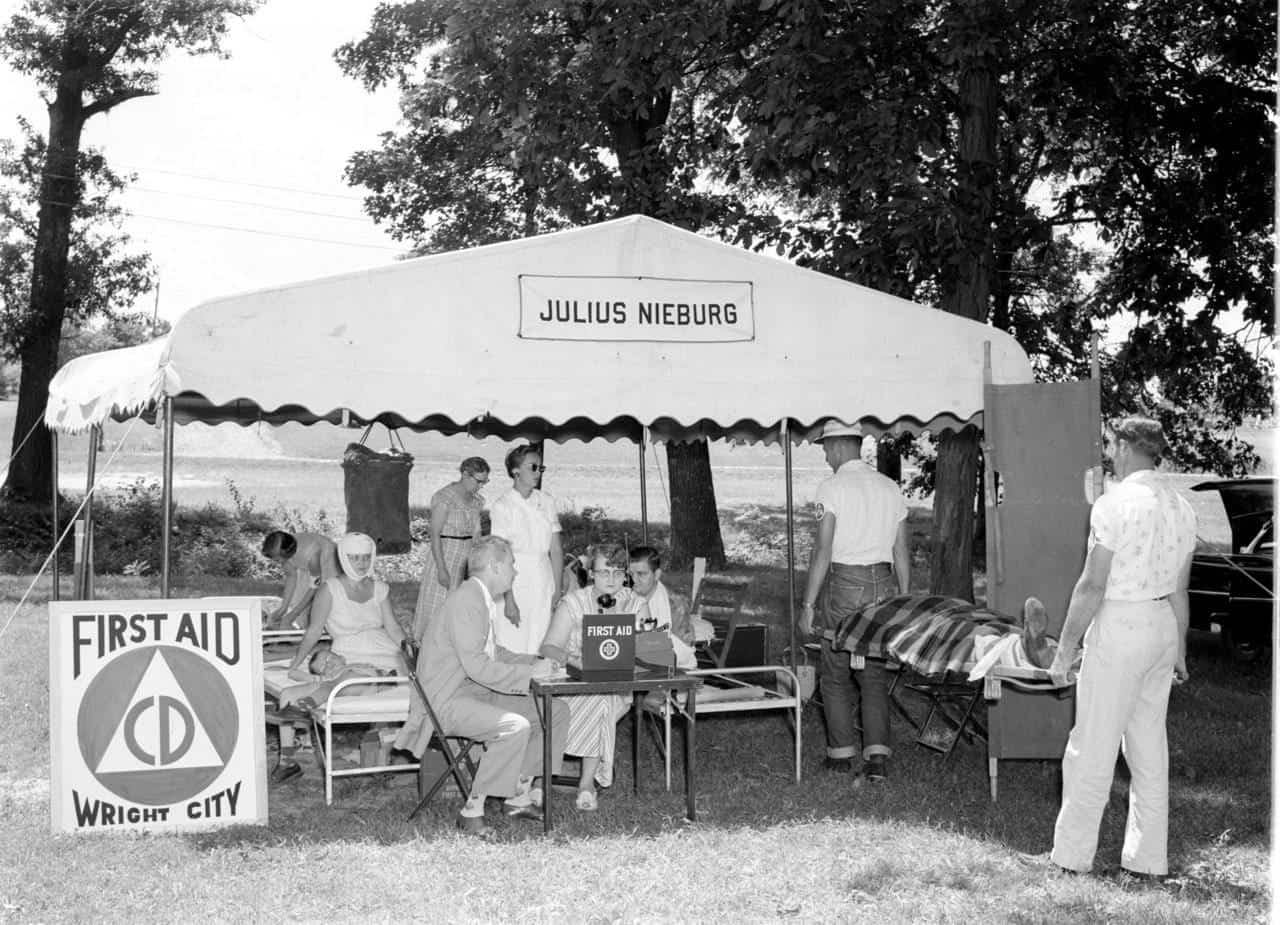
They began with what a newspaper reporter called “a bountiful meal.” Then Carl Wessel, president of the county Farm Bureau, called the meeting to order. Emory Chaney of Wright City, Warren County’s director of civil defense, explained the county’s preparations. A Red Cross first-aid class was planned. Officials were making a catalog of all the trucks in Warren County and recording their type, size, use, and availability. T. P. Davis was introduced as chief of Wright City’s Auxiliary Police unit, and August Stamer as a member of that unit and head of rescue work there.
Then David Snyder, an assistant state civil-defense director from Jefferson City, spoke about Missouri’s program and showed a film depicting the destruction caused by the atomic bombs dropped on Japan.
Afterward, there was music. Ronald Rottman, Glen Ridder and Jimmy Bratton performed, and Roger Rottmann sang a solo.
[Warrenton Banner, Nov. 27, 1958, p. 1, “Civil Defense Meeting Held Monday, Nov. 24”]
The whole experience must have felt surreal. But there it was: civil defense in the new post-World War II era. Nuclear attacks were the obvious threat, but chemical, biological, and even traditional air-raid attacks weren’t impossible. Everyone knew, or at least suspected the country was crawling with communist spies. But those felt like problems for Jefferson City, St. Louis, and other big cities. Still, Warren County residents were going to do their part.
As early as 1951, Millard Caldwell, the Federal Civil Defense Administrator, was clear about the risk and role of farm communities like ours:
Even if forewarned of war, our armed forces cannot prevent attack, for there is no sure way of keeping enemy planes from getting through our defenses. The enemy’s first objective would be to upset the war efforts of the civilian population, as well as destroy property and to kill and injure people. His aim would be to make you quit, leave your jobs, desert your homes, and star panic among you. Panic can take a tremendous toll of lives. It also can bring production to a standstill.
…
With cars, trucks, and tractors available, farm people are well equipped to aid any stricken area within their reach. Mobile support, rescue and evacuation work are phases of civil defense that rural folk are especially qualified to do. To do any of them without confusion and delay, you must be organized and trained. It is imperative that farm families learn about biological warfare and how to watch for it. While you are protecting your family and your livestock from infections and your crops from infestations, you are cooperating with the civil defense program. …We should be prepared to cope with poison gases.”
[Warrenton Banner, Friday, November 23, 1951, p. 2, “U.S. Must Build Civil Defense”]
A federal plan, a local job
A few years earlier in 1951, President Harry Truman signed the Federal Civil Defense Act. The CDA called for the construction and staffing of shelters, warning systems, and the production of emergency supplies across the country. It also placed most of the responsibility for that work on state and local governments.
After a decade of global war, Warren County residents already knew how to do much of the work.
During WWII, the Binkley metalworking company had converted its operations to producing bomber and mine-detector parts. KWRE Radio had long been carrying important war news across the region, and many civic organizations from Garden Clubs to church groups had become accustomed to converting volunteer labor into solving national emergencies such as food and clothing shortages.
Just after WWII, the Binkley Company started manufacturing shopping carts, trailer parts, and office partitions. With the signing of the Federal Civil Defense Act, the Binkley Company’s ability to fabricate and deliver sheet metal products took on new life as they moved into manufacturing technology of deterrence.
So too did new parts of civic life.
Neighbors in uniform
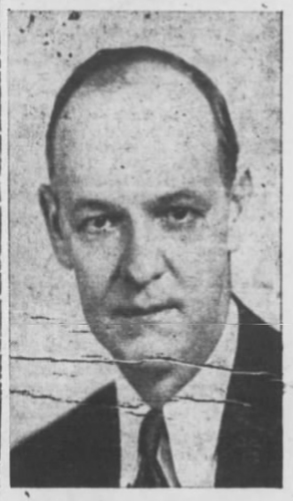
Harry McGee. Image via Warrenton Banner
McGee was elected Mayor of Warrenton in 1960 and, prior to that served several terms in the Missouri House during the 1940s and 50s He also owned and operated the McGee Motor Co. at the junction of Highway 40 and 47 selling Plymouth and DeSoto cars
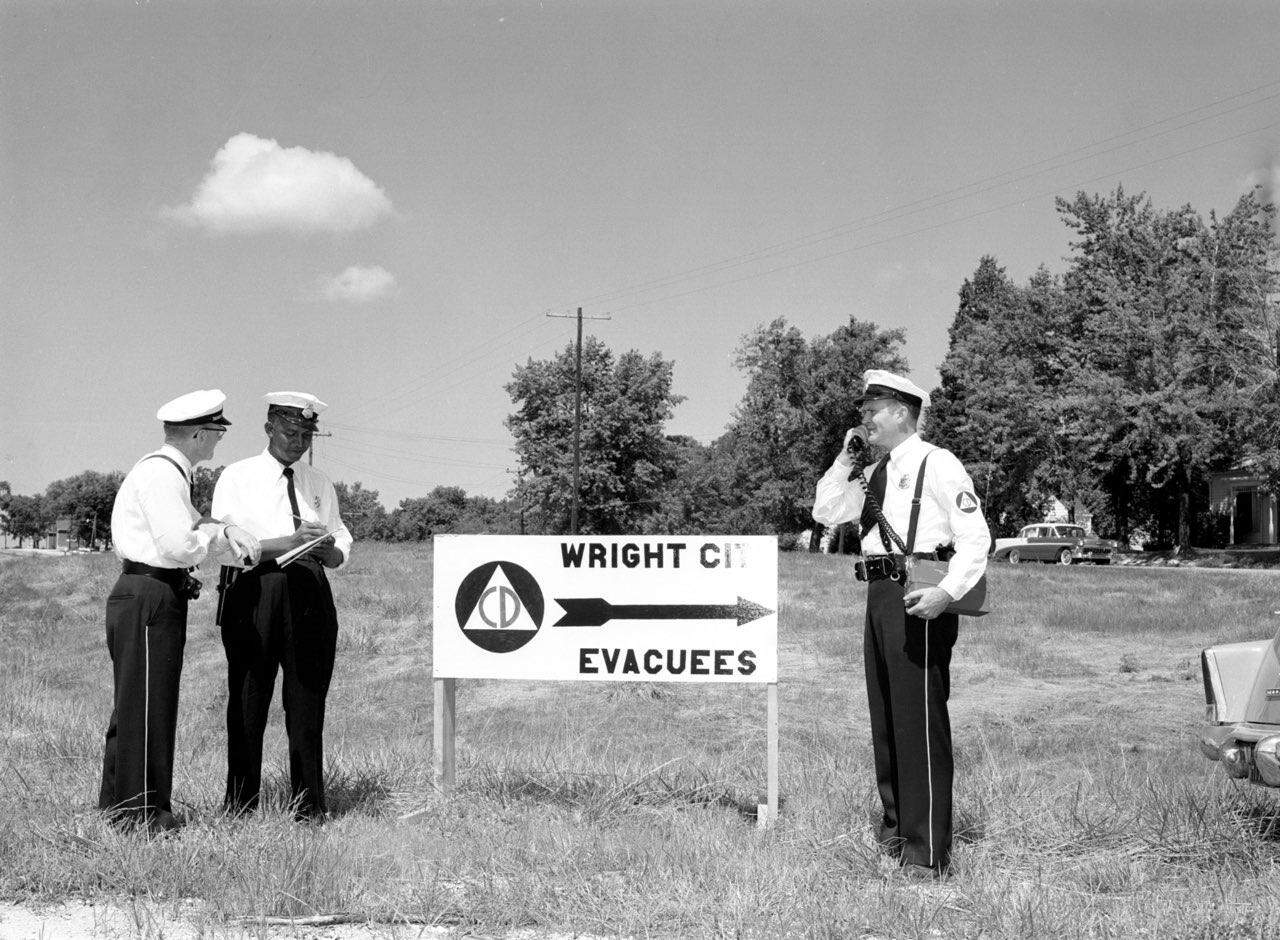
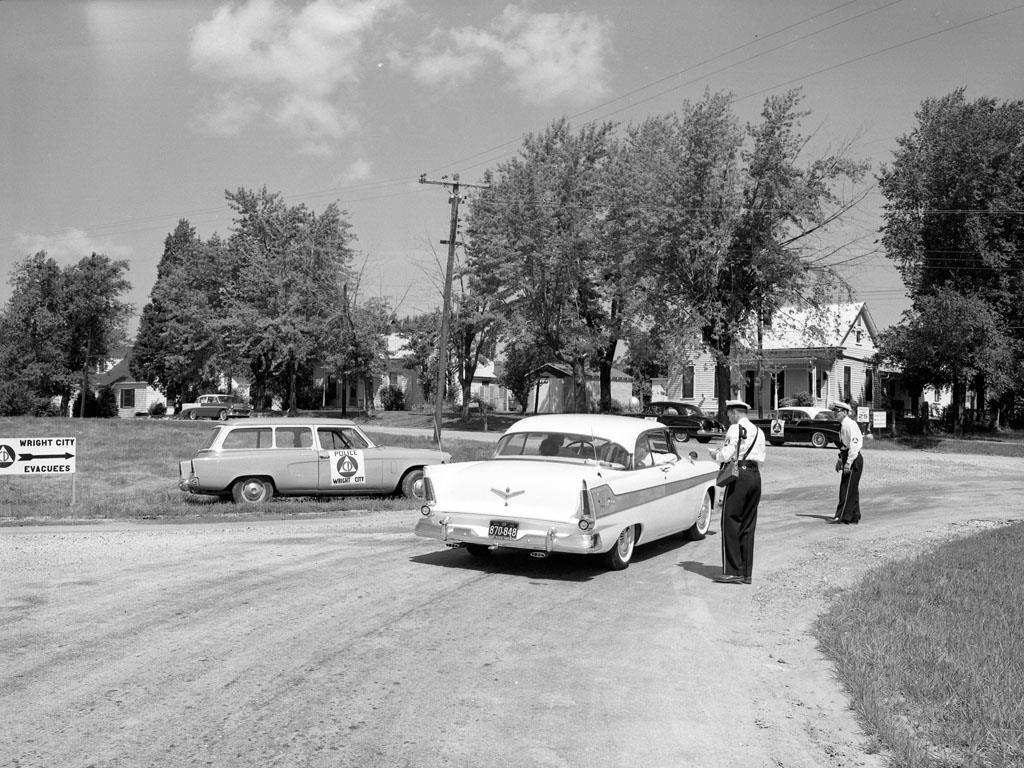
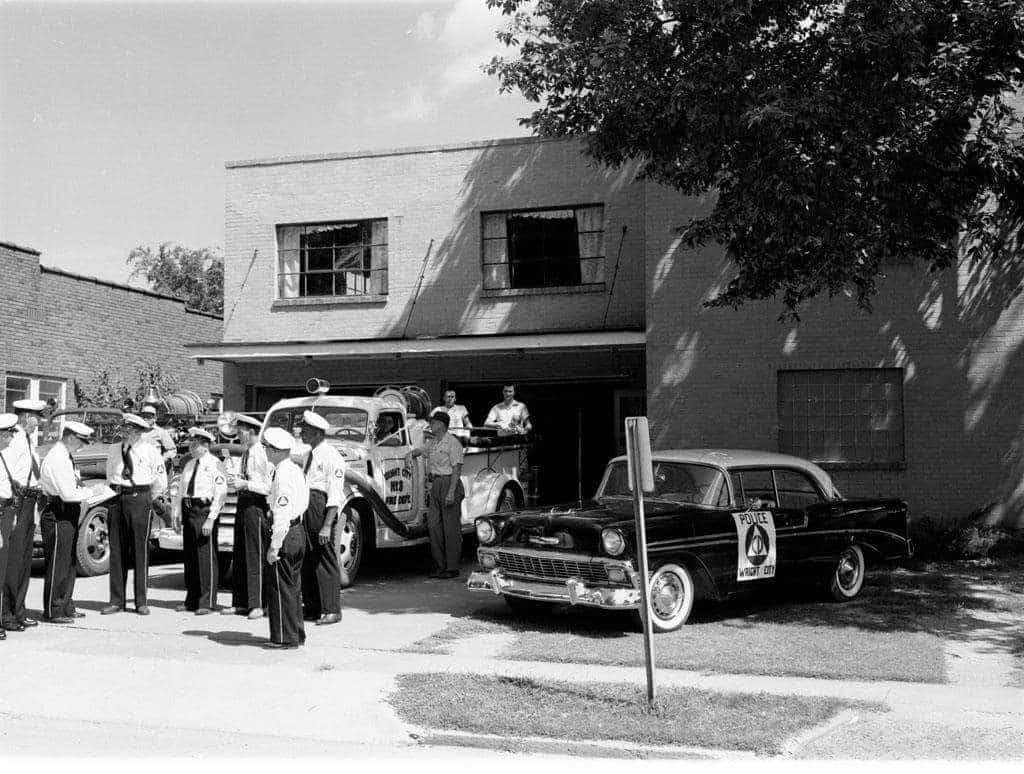
The county’s Auxiliary Police, established in June 1964 to supplement Wright City’s existing auxiliary force, was organized under local Civil Defense director Harry McGee. The force began with ten volunteers, though only four—August Marten, Elmer Page, Bill Smith, and Theodore Splitt—completed Chief Virgil Mullaney’s twenty-hour police course and received certificates.
The recalcitrant Cold War language of the era was visible in the insistence that recruits be screened against criminals or “subversives,” and in the unit’s legal responsibility to prepare for damage caused by enemy attack. Yet its day-to-day character was wholly local through first-aid classes, monthly meetings, scarce equipment, and volunteers who kept themselves “trained and ready to serve in any situation” without “compensation of any type.”
The auxiliary force worked with local volunteers, too. In July 1952, Truman endorsed the Ground Observer Corps Operation Skywatch, under which civilian volunteers in twenty-seven states watched for aircraft. He called it a “commonsense precaution” to low-flying bombers that might evade radar. Operation Skywatch asked citizens to supply missing minutes of warning with their own eyes and telephones.
[Harry S. Truman Presidential Library, “Statement by the President on the Ground Observer Corps’ ‘Operation Skywatch,’” July 12, 1952.]
Mary Ann Stamer Cuthbert, whose recollections were preserved by Jackie Nierman in the winter 2023 Warren County Historical Society newsletter, noted:
Cuthbert remembered participating in the Ground Observer Corps. She recalled binoculars, clipboards and old crank telephone boxes, and described volunteers moving between the front steps of Wright City High School, where they watched the sky, and the office of school superintendent Mr. Small, where reports could be telephoned.
Her father, August Stamer, had served in the Navy and worked around aircraft, and helped teach the volunteers to identify airplanes.
Missouri’s cave-retreat strategy and the role of the farmer
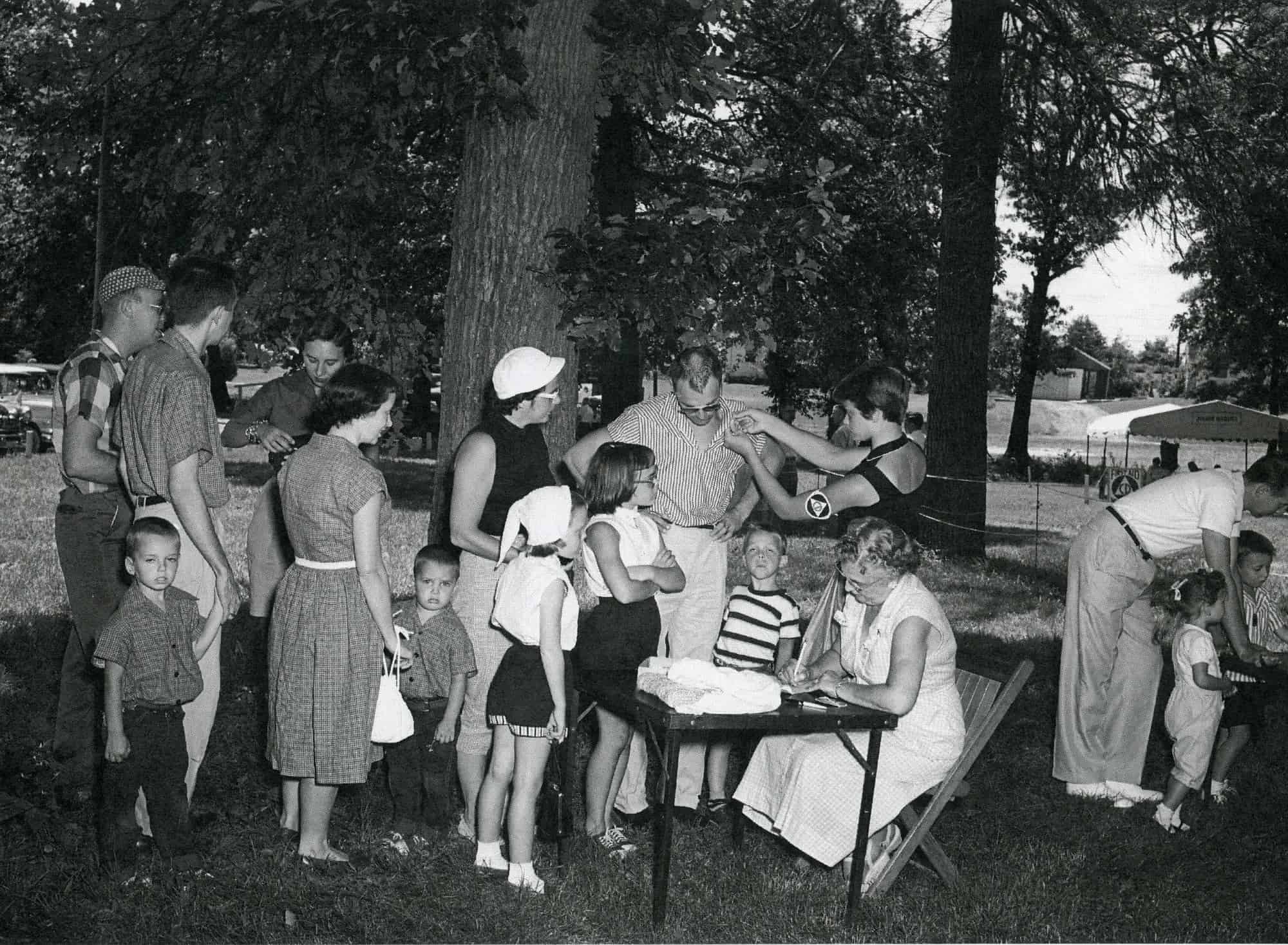
Missouri planners had a strategy for nuclear threats. In 1961, the state Civil Defense Agency explored moving urban populations into rural caves and mines after a nuclear attack. The proposal assumed rural residents would run reception centers and provide food, sanitation, and first aid for their neighbors from St. Louis and Kansas City. Not surprisingly, rural citizens elsewhere greeted such expectations of running makeshift cave hospitals with skepticism or hostility.
[State Historical Society of Missouri, “Using Mines, Caves, and Missouri’s Underground Spaces as Fallout Shelters During the Cold War.”]
Related story
Warren County’s caves have a rich and mysterious past. Read more about the legend and lore of Warren County’s caves.
The CDA had a list of “RFD” or “Rural Family Defense” items. The 5-point plan laid out on leaflets distributed to farmers instructed them to:
- Take care of your family and yourself and prepare to “live off the land” in the event of fallout and urban manufacturing disruption and understand germ and biological warfare defense.
- Keep your farm in production estimates. Since atomic bombs were expensive, they would only be used in urban areas for maximum casualties. Survivors would be totally reliant on outside food production from rural areas.
- Be ready to market your production, and know what the county plans for moving the most critical farm supplies to national markets.
- Be ready to take in evacuees. Federal Civil Defense laws provided that farmers would be paid for anything that is properly requisitioned.
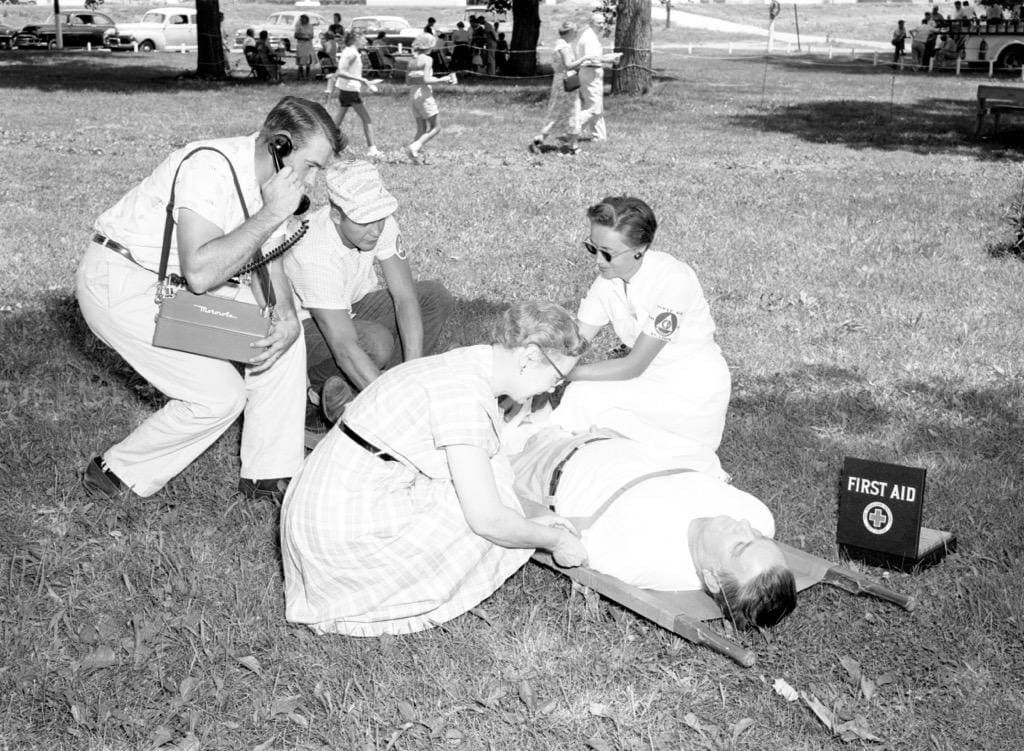
- Plan to help others, as rural families may be asked to help conduct rescue work, provide first aid, and serve as civil auxiliary police. Training classes were recommended.
The attack that fortunately never came still led to some fallout
Neither Missouri nor America never suffered the sort of worst-case-scenario attack like what anyone imagined could happen during the Cold War. But the preparations found better use in other emergencies. The Civil Defense Force’s stated mission was always to “supplement the regular police service of the county during times of emergency or disaster,” and in one report it was noted “it is not necessary for there to be an enemy attack” before they might be called out. Fires, tornadoes, floods, fairs, parades, and large public gatherings all fell within their charge. Like in 1967 when Warren County’s CDPF deployed to St. Louis after a deadly tornado there.
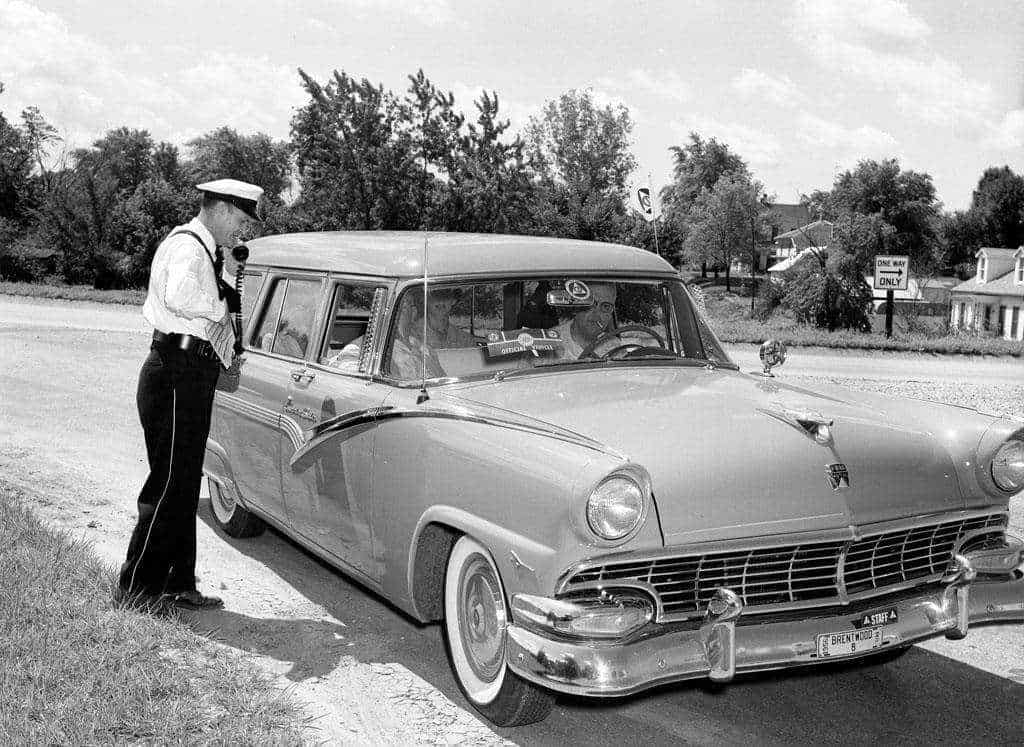
During a Warrenton blackout caused by an ice and sleet storm, Warren County Civil Defense Police provided additional patrols. They watched businesses, helped travelers find the few restaurants and filling stations that remained open and assisted stranded motorists.
[Warrenton Banner, Feb. 2, 1967, p. 1, “Civil Defense Police Render Valuable Help”]
From the newsletter archive
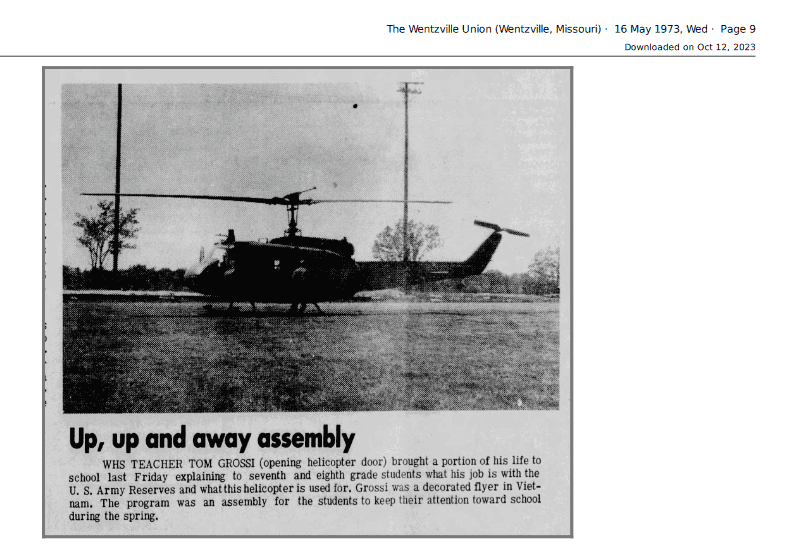
Later, in the 1970s, Wright City received a surplus helicopter piloted by Wright City High School teacher Tom Grossi for use in civil defense.
In neighboring St. Charles County to the east, the federal government operated the Weldon Spring uranium feed-materials plant from 1957 to 1966, storing nuclear waste in four open-air raffinate pits. South, in neighboring Franklin County, Nike site SL-60 stood as the only Missouri-side Hercules battery in the St. Louis defense ring from May 1960 through December 1968. The Hercules was designed to carry a nuclear warhead. Warren County was not a missile base, but did sit at a crossroads between the uranium plant, the air-defense battery, and missile work engineered by Binkley.
In the latter years of the Cold War, some of the technology of deterrence had become a local problem. In August 1982, Meredith Hunter Bollmeier and Ray Duke founded St. Charles Countians Against Hazardous Waste after the Department of Energy proposed making Weldon Spring a regional radioactive-waste repository for five states. The group tested wells and soil, educated residents, fought further dumping, and pressed for cleanup. Missouri state officials later confirmed contamination findings in 1983, and the group was recognized in 1986 for its effectiveness.
Later reporting found elevated uranium readings in three lakes there during the 1980s and 1990s. Dwain Jansen, whose family caught fish there in the 1980s and whose wife later died of cancer, is, in a sense, a victim of the locally inherited hazards of the Cold War.
The era’s prolonged sense of fear and the very real threat of the unknown is a reminder that we can’t defend against everything.