Before outlet malls and mail-order catalogs, Warren County got its style from the sewing machine, in Home Ec class, and television.
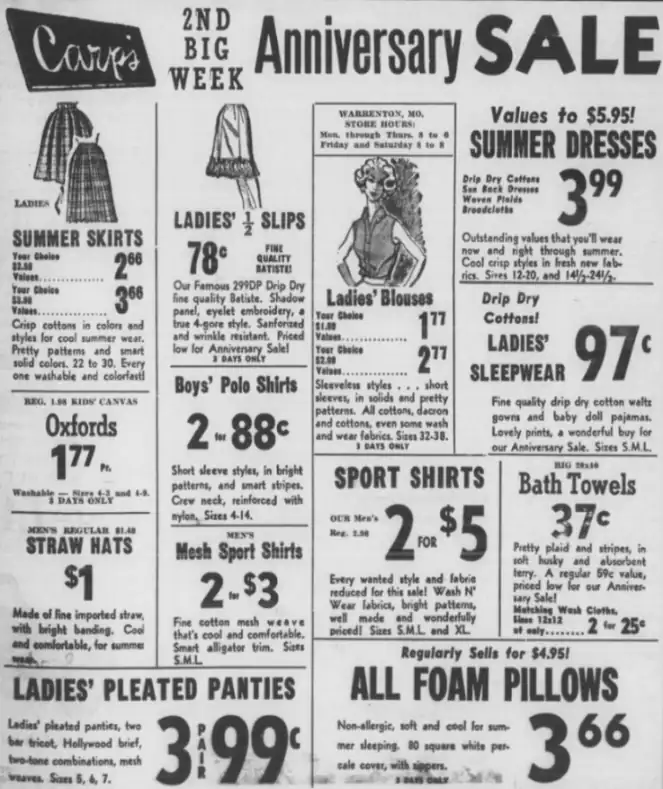
In April 1955, the young ladies of Warrenton High School’s Future Homemakers of America (FHA) held a fashion show. All of the girls wore clothing they had made themselves, some by hand stitching and some with sewing machines. Their dresses and skirts featured floral prints and handsome buttons. Their output, so important to that time and place, would prove useful in social occasions, business affairs, and casual work. Several smart shirts and trousers for the young men were on display, too, also made by the FHA. By making their own clothes, the girls were learning how to save money for the home. They were practicing what Wendell Berry later called “a culture of thrift and economics”. A single ladies’ summer skirt cost around $3 in the late 1950s (about $34 in 2026 dollars).
ON SALE FOR
$3
for a ladies’ summer skirt in the late 1950s
About $34 in 2026 dollars
Down the hall at Warrenton High School that same year, the Home Ec classes fashioned group ensembles and dresses. Even the boys had their own Home Ec. class within high school to do some minor stitching repairs to clothes and learn a few cooking skills. Perhaps more importantly, they were there to learn an appreciation for the work, even if it was expected that their future wives would do most of it for them.
“A culture of thrift and economics.”
— Author and poet Wendell Berry, on the habits young homemakers were practicing
Shopping on Main Street
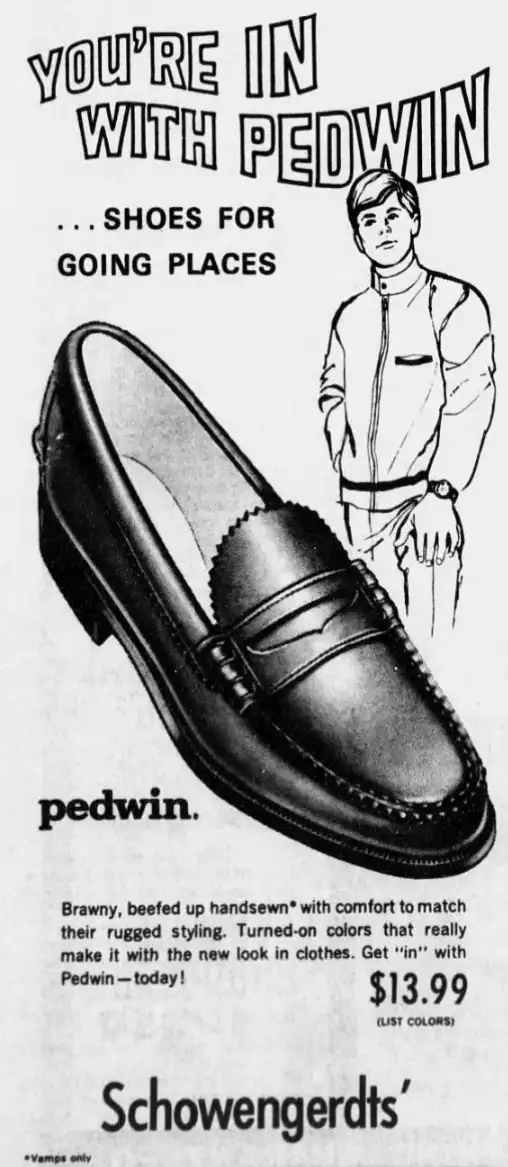
In the back of the 1955 Wahisho Yearbook, Schowengerdt and Son promoted “Clothing and Dry Goods” with snappy advertisements of shoes. Merry Marie, owned and managed by Jean Delventhal, invited shoppers to come in “For That New Look in Clothes” hanging among its peach-colored walls and maroon inlaid linoleum1. And for whatever you bought, Henke Cleaners was ready to maintain it.
The “New Look” advertised to students and women around the region was not entirely new. That marketing phrase had originated from the international fashion industry, and it had trickled into the rural communities across the country throughout the 1940s. In the early and mid 1950s, that “new look” was all about fitted waists, full skirts, formal taste, and coordinated accessories for women. Men’s clothing became more casual.
A 1950 Wright City yearbook advertised Merry Marie’s ladies’ “ready-to-wear” and Carp Department Store in Warrenton, along with Tomek’s general merchandise in a newly rebuilt Wright City location. A large fire would later destroy Tomek’s in 19532.
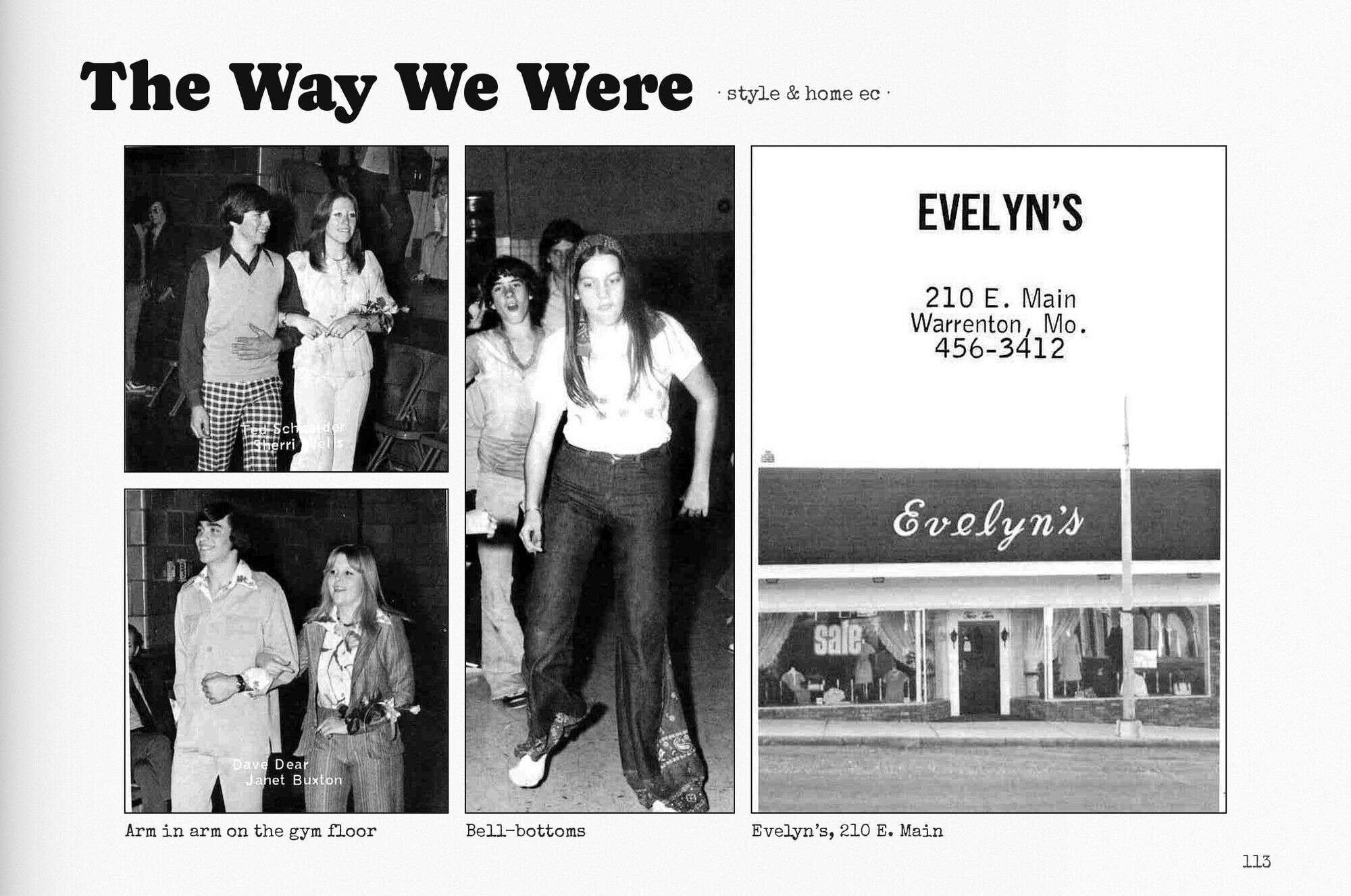
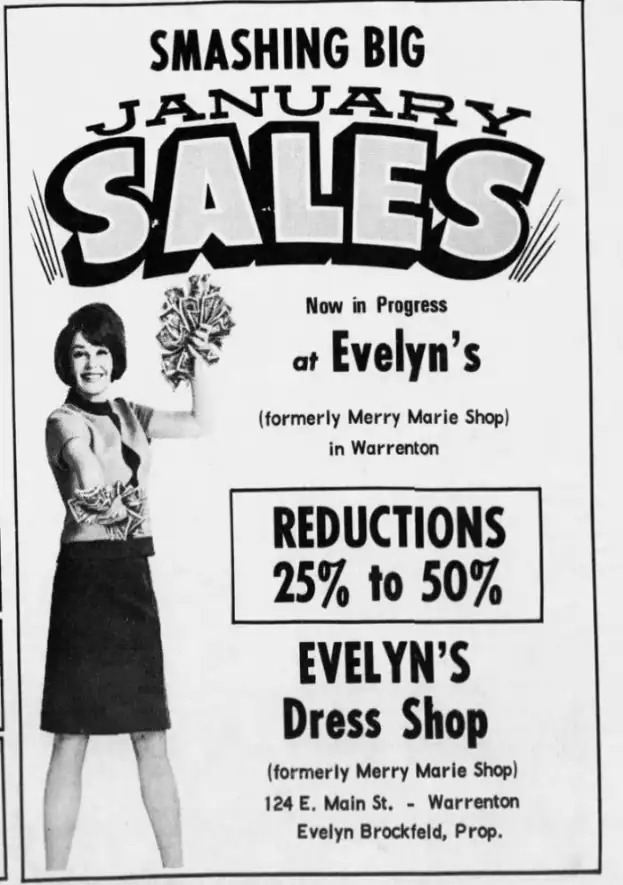
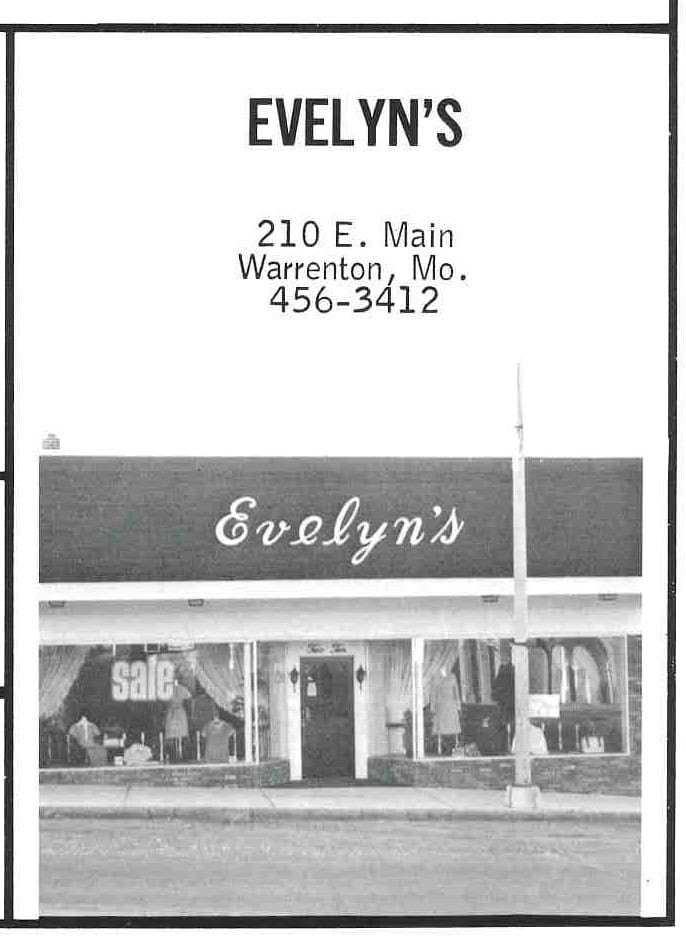
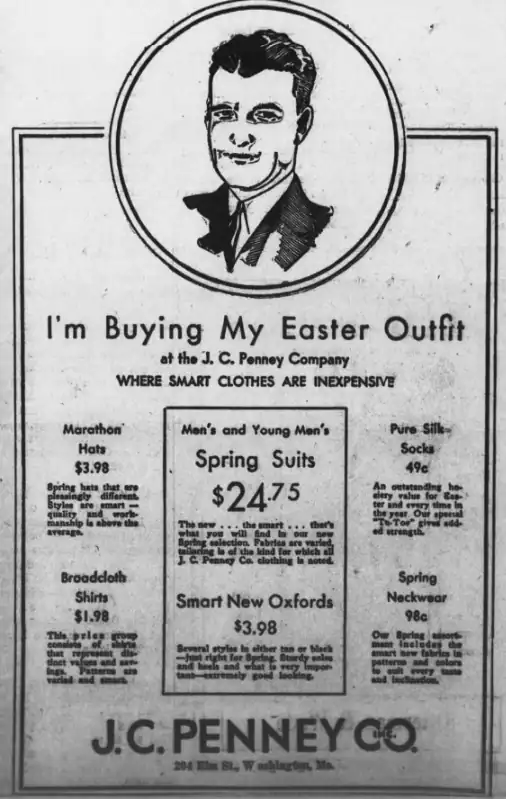
Schowengerdt’s, Lohman’s Variety Store, Tomek’s, and other local merchants were common in school yearbook ads and around town into the 1960s and 1970s. Merry Marie became Evelyn’s Dress Shop after Jean Delventhal sold the business in 1966 to Mrs. Evelyn Brockfeld3. Catalogs and mail-order operations widened the selection of fashions, too, first with the large Sears Roebuck and Co. The eponymous J.C. Penney introduced its order-by-mail catalog in 1962 and 1963, following its acquisition of the discount retailer General Merchandise Company. J.C. Penney had been operating a store on Elm Street in Washington, Missouri since the 1930s.
A Warren County Fashion Timeline
1945
Merry Marie Shop opens in a new Warrenton location, with peach-colored walls and maroon inlaid linoleum.
1955
Warrenton High School’s Future Homemakers of America stage a fashion show of clothes the girls sewed themselves.
1962–63
J.C. Penney launches its order-by-mail catalog, widening the choices for rural shoppers.
1966
Jean Delventhal sells Merry Marie, and it becomes Evelyn’s Dress Shop.
1970s
Interstate 70 is completed, drawing the county closer to St. Louis-area stores.
1993
The Warrenton Outlet Center opens along I-70 with 200,000 square feet of national brands.
Fashion moves from sewing machines to store racks
As fashions changed and new ways to buy clothes emerged, so did the need for making one's own clothes. For generations, women studied a pattern, considered the price of fabric, and prepared clothing to their taste and needs for themselves and the family. After World War II, newfound American prosperity turned fashion into something akin to a "translated style", where attire was bought from a store and later altered or fixed up to extend its life, but increasingly just bought off a rack. Eventually, even the skills to repair clothing withered. That culture of clothing economics and hand-drawn stitching required skill and taste, which has lost much of its skill requirements.
Fashion was driven by popular media, as it always had, but took off in the 1960s as television entered more homes. For instance, a woman could adopt slacks first for housework or outdoor tasks in the early 20th century, but never for outside the house. Then slacks became acceptable for errands, travel, and eventually work or church, and TV helped speed that adoption.
Late in CBS' 1962-63 primetime lineup, Peggy "Peg" McMillan appeared in four episodes of The Andy Griffith Show's second and third season. Played by actress Joanna Moore, Peggy was the sharp, educated county nurse, drove a shiny Ford Thunderbird, came from a wealthy family, and played Sheriff Andy Taylor's love interest in small-town Mayberry. She was also the first woman on television to be filmed wearing pants.
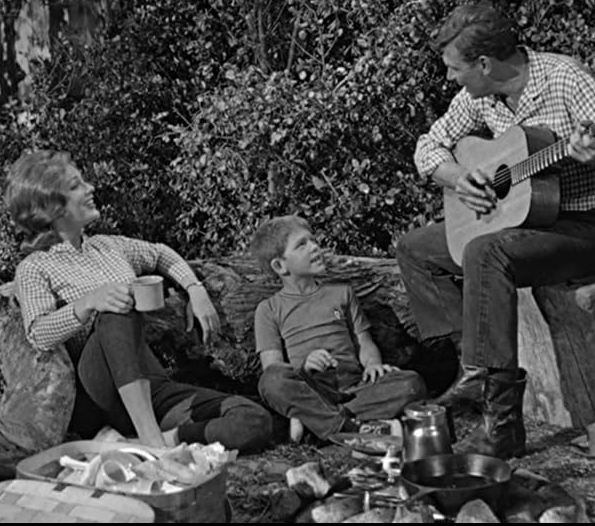
Wider choices and even wider pant legs
Through the late 20th century, the Warren County 4-H promoted girls' projects in clothing, foods, and "home beautification", which included everything from decorating to gardening. By the 1980s and 1990s, these 4-H projects may have been more about the adult parent's nostalgia for an era that was fading even when they were young. The judging criteria for fashion changed over time, but most entrants were consistently judged on the overall appearance of the clothes they made.
FHA remained a large, visible organization well into the 1970s and 80s, and home economics was still an honored department in Warren County High Schools. During the 1970s, acceptable clothing widened as much as everyone's pant legs. Women’s dresses moved from fitted 1950s shapes to sheath and A-line dresses, shorter skirts, bright patterns, and synthetics. By the 1970s, pants, jeans, athletic clothing, handmade-looking details, and colorful polyester had blurred the old boundary between male and female everyday dress.
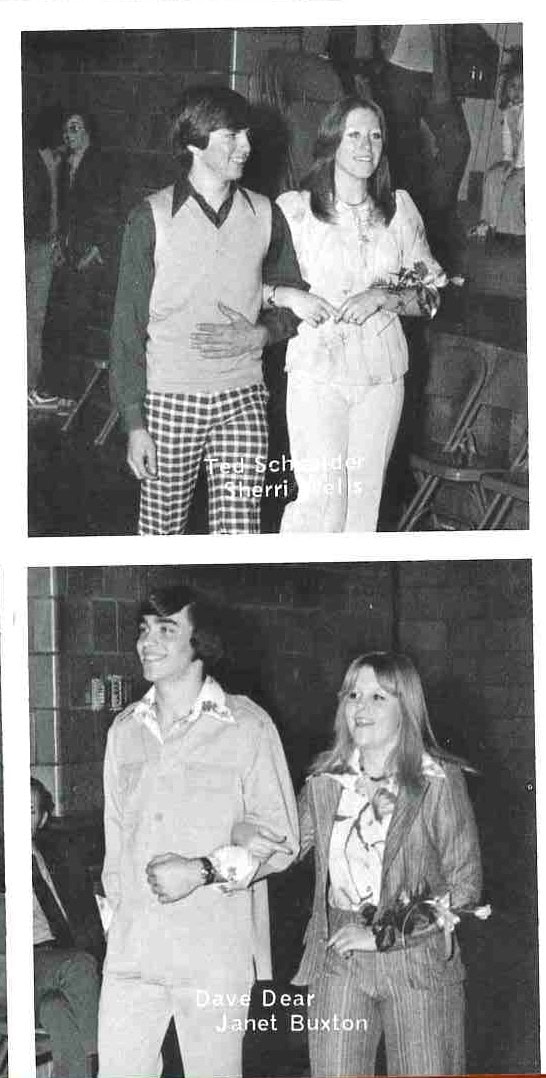
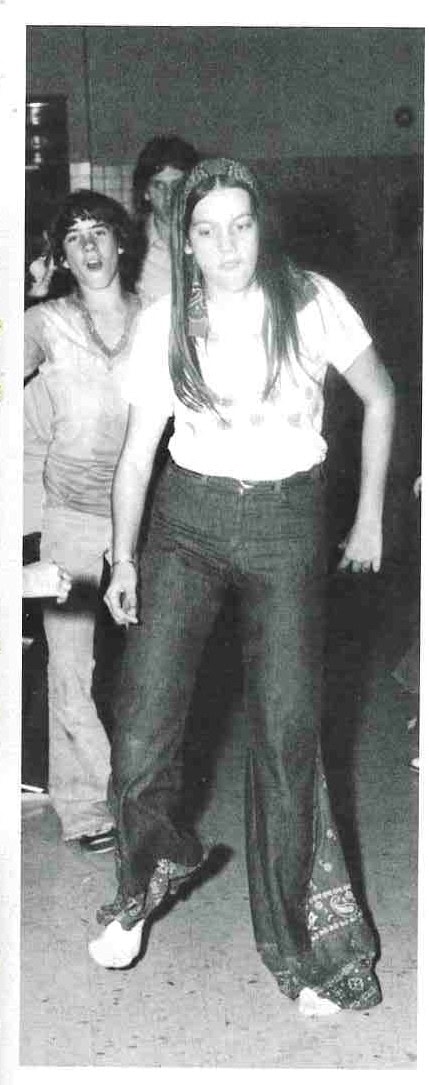
Shopping moves to the highway
The geography of clothes shopping changed, too. Highway 40 had run through Wright City’s center during the 1950s and 1960s. The divided highway moved traffic to the north side of town. This period brought new motels, restaurants, filling stations, and manufacturing, and made St. Louis-area shopping more reachable, too. Retailers started to think in terms of interchanges and parking lots rather than only Main Streets. Clothing choices continued to evolve and expand as the county became larger, more mobile, and more closely tied to the metropolitan edge of St. Louis (which accelerated with the completion of I-70 in the 1970s) along with the cosmopolitan views from film, TV, and magazines.
Into the 1980s, stores like Schowengerdt’s still connected shoppers to the Main Street, but discount-oriented retail from mass-market retailers in bright, expansive shopping malls with dozens of stores steps away was too cheap to ignore. The Warrenton Outlet Center, one of Missouri's few such malls, opened along I-70 in 1993 and featured 200,000 square feet of discounted national brands like Nike and Levi's. But the downward trend of traditional malls in the last twenty years have impacted outlet malls, too, and the aging Outlet's storefronts have sat mostly vacant in the last twenty years.
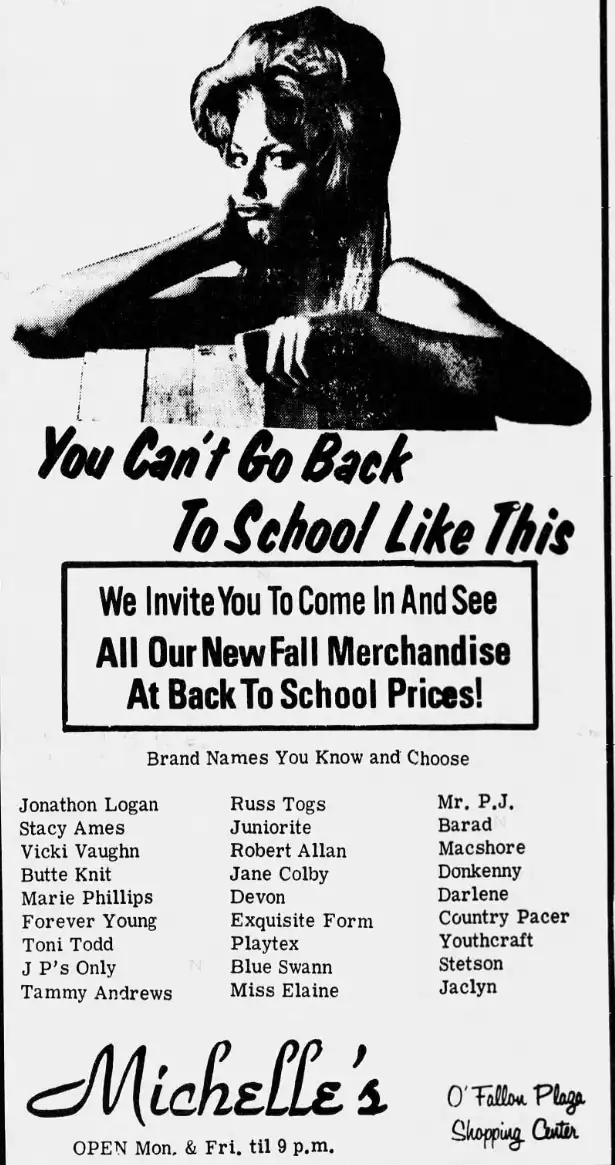
To modern shoppers, the girls in the 1955 Warrenton High School fashion show were displaying dresses. But they were arguably doing much more by demonstrating the ability to make their modern lives fit into the broader economics of the home.
Additional Sources
Additional research provided by The Warrenton Banner and various Wahisho Yearbooks from the 1950s-1970s.